
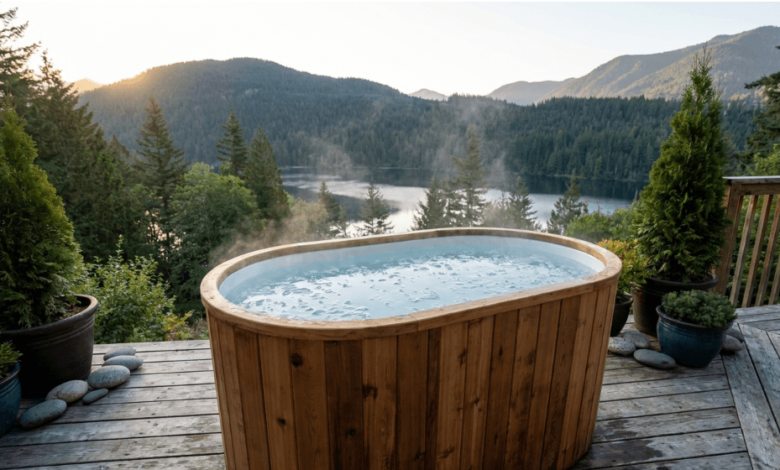
A workable budget routine sets water around 55 to 60 degrees, keeps sessions to thirty seconds up to three minutes depending on experience, and runs two to four times a week rather than daily from the start. None of this requires an expensive chiller-equipped setup with a precise digital readout; a fifteen-dollar pool thermometer and a basic kitchen timer get the same job done in a stock-tank or ice-bath setup as they would in a full commercial unit. The details below cover what actually changes the experience versus what is mostly marketing.
What Temperature Actually Matters, and What’s Just a Number?
Cold water immersion research generally studies exposures somewhere in the 50 to 59 degree range, and there is no evidence that going colder than that produces a meaningfully bigger effect for a typical home user. A budget setup using bagged ice in an insulated stock tank can reliably hit the low-to-mid 50s without a chiller at all, which covers most of what the research actually looked at. Spending extra for a chiller that reaches deep into the 30s buys precision and consistency, not necessarily a stronger effect backed by the current evidence.
How Long Should a Session Actually Last?
Most people new to cold plunging start around thirty to sixty seconds and build toward two or three minutes over several weeks, rather than attempting a long session on day one. Pushing duration too aggressively is the most common reason people quit early, since an unpleasant first few sessions discourage a habit that only gets easier with repeated, gradual exposure. There’s no strong evidence in the current research that five or ten minutes produces a meaningfully larger benefit than two or three, which is good news for anyone trying to keep a routine cheap and simple rather than elaborate.
How Often Per Week Makes Sense?
Two to four sessions a week shows up as a common, sustainable pattern in most reporting on the practice, and it’s also the frequency that keeps a budget ice-and-cooler setup manageable, since refilling ice for a daily habit adds real recurring cost fast. Someone using a chiller-equipped tub has less reason to worry about this tradeoff, since the equipment does the cooling automatically, but anyone running a genuinely low-cost setup should weigh ice cost against session frequency when deciding how often to plunge.
Setting Up a Budget Session Without a Chiller
A galvanized stock tank or heavy-duty inflatable tub filled with hose water and several bags of ice reaches a workable temperature for well under the cost of a chiller-equipped unit, and an insulated cover keeps that temperature from climbing too fast between sessions. This approach trades convenience for upfront savings: expect to add ice before each session rather than flipping a switch, and expect the water to warm up over the course of a day faster than a properly insulated, chiller-equipped tub would. For someone testing whether the habit sticks before committing to bigger equipment, a look at what a proper chiller setup like the options at SweatDecks’ lineup actually costs helps frame whether upgrading later makes financial sense.
Entry Technique: Why the First Ten Seconds Matter Most
Lowering in slowly, feet first and pausing at the waist for a few breaths before submerging the rest of the body, does more to make a session tolerable than any change in water temperature. The gasp reflex, the sharp involuntary intake of breath that hits on sudden cold exposure, is strongest in the first few seconds and eases quickly once the initial shock passes, so rushing in fast usually backfires by triggering a stronger version of the exact reaction someone is trying to avoid. Slow, controlled exhales through the mouth during those first ten seconds help more than gritting through it, and this technique matters just as much in a bargain stock tank as it does in an expensive chiller-equipped unit, since the physiological response is about the sudden cold, not the equipment.
Basic Etiquette for Shared or Budget Setups
Rinsing off before entering keeps water cleaner for longer between changes, which matters more with a basic filtration setup than with a full ozone system. Agreeing on a session length ahead of time, and respecting it, keeps a shared budget tub moving through multiple users without anyone waiting around in a cold garage. Avoiding entry within a couple of hours of alcohol is a recurring caution across the broader cold exposure literature, since alcohol and cold water immersion both affect heart rate and blood pressure and the combination adds unnecessary risk.
Being Honest About What the Evidence Supports
The current research on cold water immersion shows modest support for mood and perceived recovery after exercise, association rather than proof of a specific mechanism, and it is genuinely mixed on bigger physical outcomes. Some evidence outside this core research suggests cold exposure right after resistance training may blunt strength and muscle gains, which matters for anyone plunging immediately after lifting rather than on a separate day. None of this means the practice isn’t worth doing; it means expectations should track what the evidence actually shows rather than the boldest claims found online.
How Weather and Season Change a Budget Routine
An outdoor stock tank in winter can sit naturally in a usable temperature range without any ice at all in a lot of climates, which cuts the ongoing ice cost of a budget setup close to zero for several months a year. Summer works against a no-chiller setup, since ambient heat pushes water temperature up faster and means buying more ice per session just to stay in a comfortable range. Anyone running a genuinely low-cost setup year round should expect the routine to get more expensive, or the sessions to get less consistent, during the hottest stretch of the year unless a shaded spot and a good cover are already part of the plan.
Adjusting Etiquette for a Setup With No Digital Readout
A basic setup without a chiller’s digital display still needs a way to confirm temperature before each session, and a floating pool thermometer left in the tub does that job for about fifteen dollars. Skipping this step and guessing by feel leads to inconsistent sessions, sometimes too mild to matter, sometimes colder than intended, which makes it harder to judge whether a routine is actually working. For a shared budget tub specifically, posting the current reading somewhere visible before each use keeps expectations consistent across different household members without anyone needing to ask.
Frequently Asked Questions
What temperature should a beginner start a cold plunge at?
Around 58 to 60 degrees is a reasonable starting point, cold enough to feel it without being unpleasant enough to quit early.
How long should a cold plunge session last?
Most people start around thirty to sixty seconds and work up to two or three minutes over several weeks.
How often per week should someone use a cold plunge?
Two to four times a week is a common, sustainable range, with no evidence that daily use produces proportionally larger benefits.
What is basic etiquette for a shared or budget cold plunge?
Rinse off first, keep sessions to an agreed length, and avoid entering within a couple hours of alcohol.
References
- Effects of cold-water immersion on health and wellbeing: A systematic review and meta-analysis (PLoS One, 2025)
- Effects of cold water immersion after exercise on fatigue recovery and exercise performance: meta analysis (Frontiers in Physiology, 2023)
- Cold-water immersion (cryotherapy) for preventing and treating muscle soreness after exercise (Cochrane Database of Systematic Reviews, 2012)
By Jordan Wexler